Composable + Kontext OS
The Platform for Production AI.
Ready-made domain modules with process and UI logic — orchestrated by the Kontext OS. AI agents transform your regulations and processes into production-ready applications. Modular, traceable, sovereign — with zero vendor lock-in.
From Document Chat to Process AI
The bottleneck isn't text — it's structured execution. A chat answers questions. Cognitive Hive executes cases.
Document Chat
Answers questions from documents. Returns text. No status, no deadlines, no evidence chain.
Composable / PBC
A ready-made domain module (Packaged Business Capability) with process and UI logic. Runs in the Hive, creates a Case Cell per case and delivers:
"Chat produces text — Composables produce results."
Cell Knowledge + Skill Agents → Production Code
Modular, auditable, and immediately operable. Governance: Autonomy levels · Four-eyes · Audit
What does each Composable deliver? — Output Contract
Output Contract (mandatory)
Every Composable delivers exactly four outputs — regardless of domain:
How does the knowledge lifecycle work? — KnowledgeOps
Knowledge as a Supply Chain
Our approach to the knowledge lifecycle: From ingestion to continuous improvement — in seven steps.
Looking ahead: Operating cells and cases generates management intelligence — from quality and impact to capacity analytics.
How does integration work? — Side-by-Side
No Replacement — Gradual Integration
Your domain system remains the System of Record. PBCs (Composables) work alongside and connect to e-file, DMS and domain systems – no big-bang, no risk.
Augment
PBC runs in the Hive alongside the domain system. Results flow back into the existing system. Zero migration risk.
Offload
Routine checks automated. Case workers review edge cases and confirm results. 80% time savings (target).
Replace (optional)
Once proven: PBC takes over the process entirely. Domain modules are shared across agencies.
What can the Workbench do?
The Workspace for Intelligent Case Processing
All sources, all rules, all verification steps – in one interface. The case worker controls, the AI assists.
Files & Sources
All documents of a case in one place. PDFs, emails, forms – automatically extracted and linked.
Automated Verification Logic
Laws as executable rules. The system checks all prerequisites and shows you exactly what's missing.
Specialized AI Agents
Each agent knows its domain. Intake, verification, execution, evidence – all working together.
Ready Artifacts
Decisions, memos, hearings – fully formatted with complete reasoning chain.
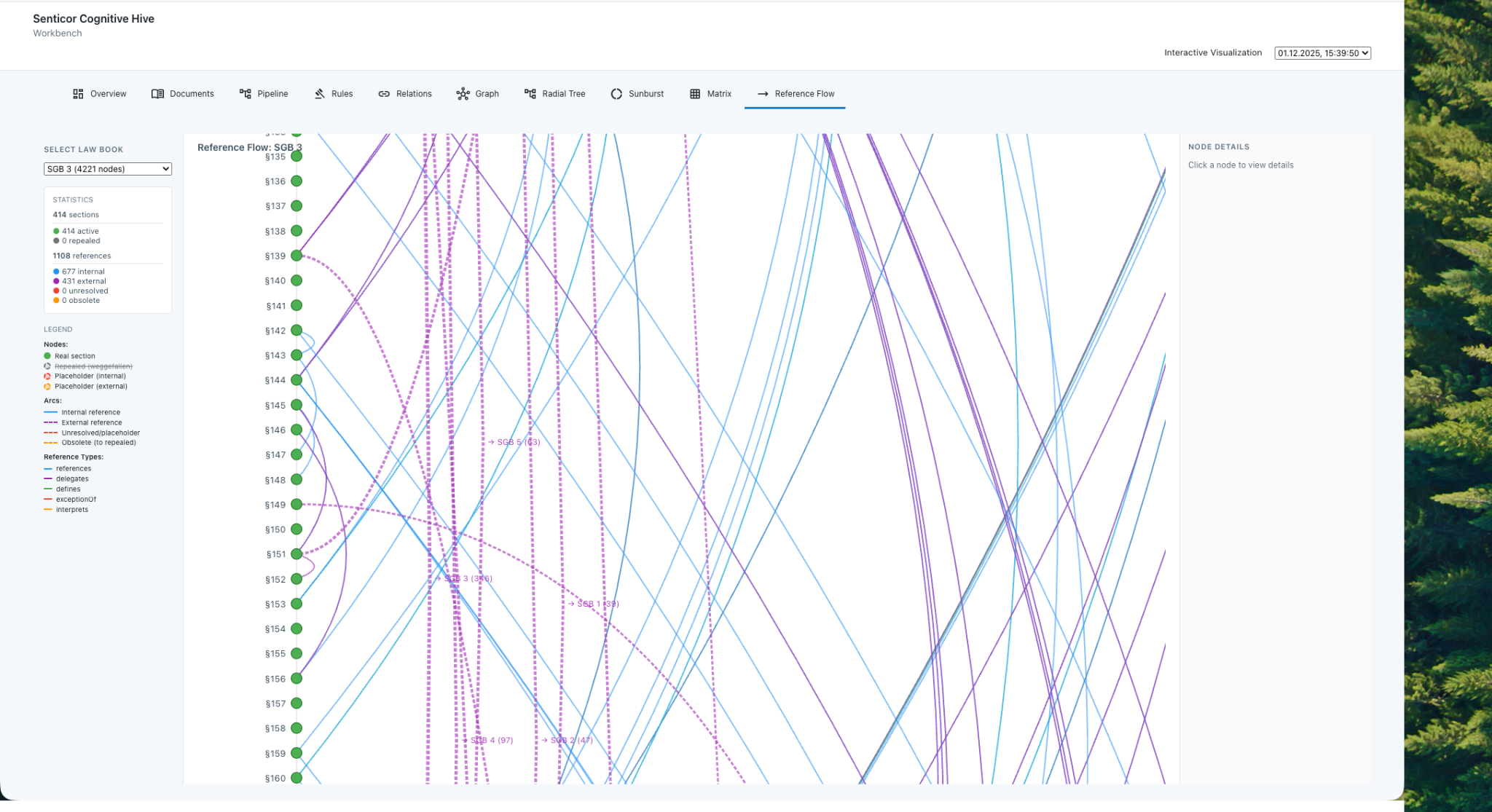
Context Cells Workbench: Link sources, generate Knowledge Graph, extract rules.
What does a workflow look like? — From File to Decision
From File to Final Decision
Automated case processing in 4 steps – you stay in control.
Intake
Upload documents, automatically classify and extract.
Verification
Automatic subsumption: All prerequisites are checked.
Review
You review the result. Every decision is traceable.
Output
Final decision with complete reasoning and Evidence Pack.
🔗 Complete Traceability
Every decision is auditable: Which source? Which rule? Why this result?
Which components are inside? — 3 Building Blocks
Three Building Blocks for Every Domain Process
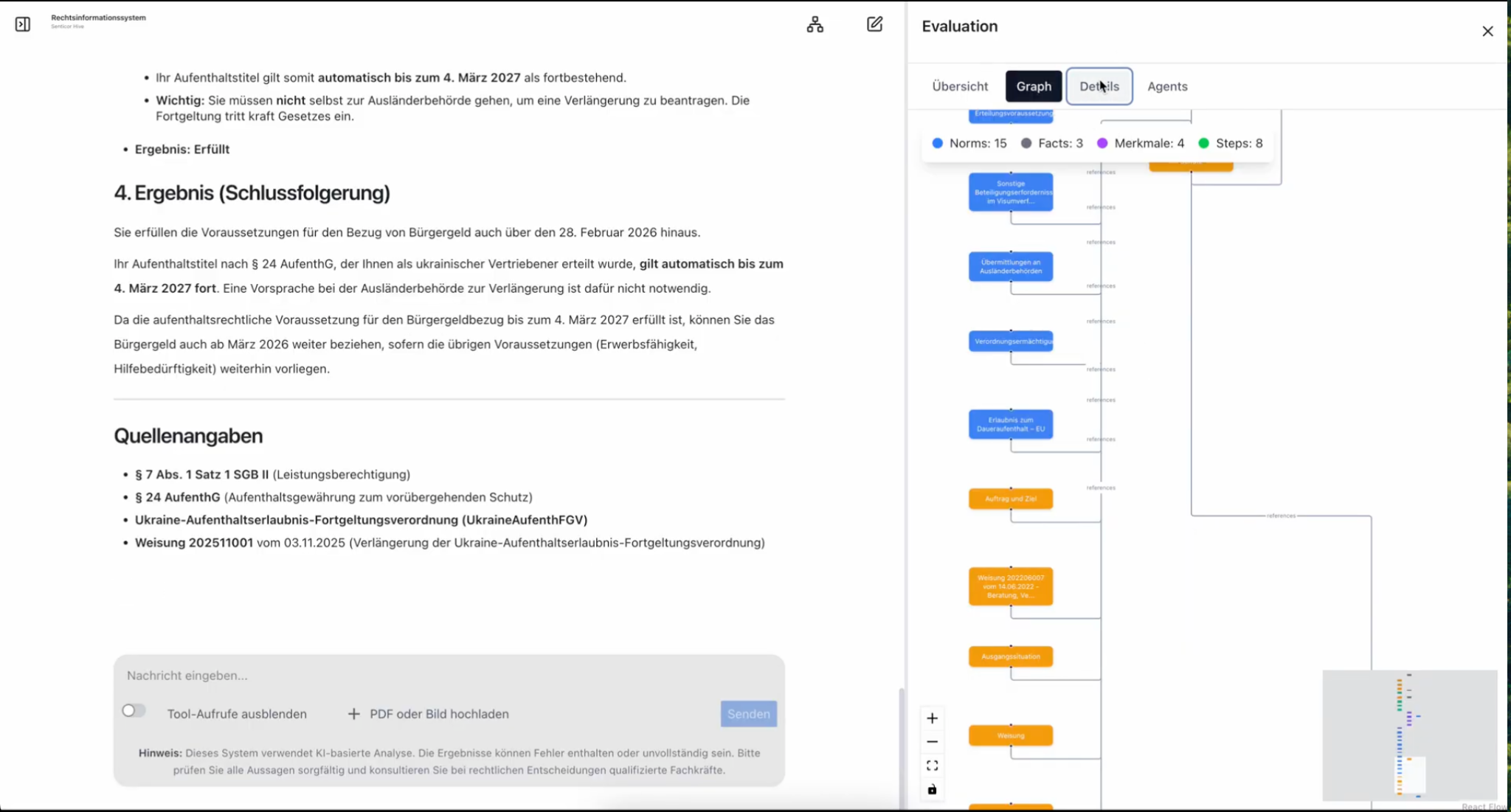
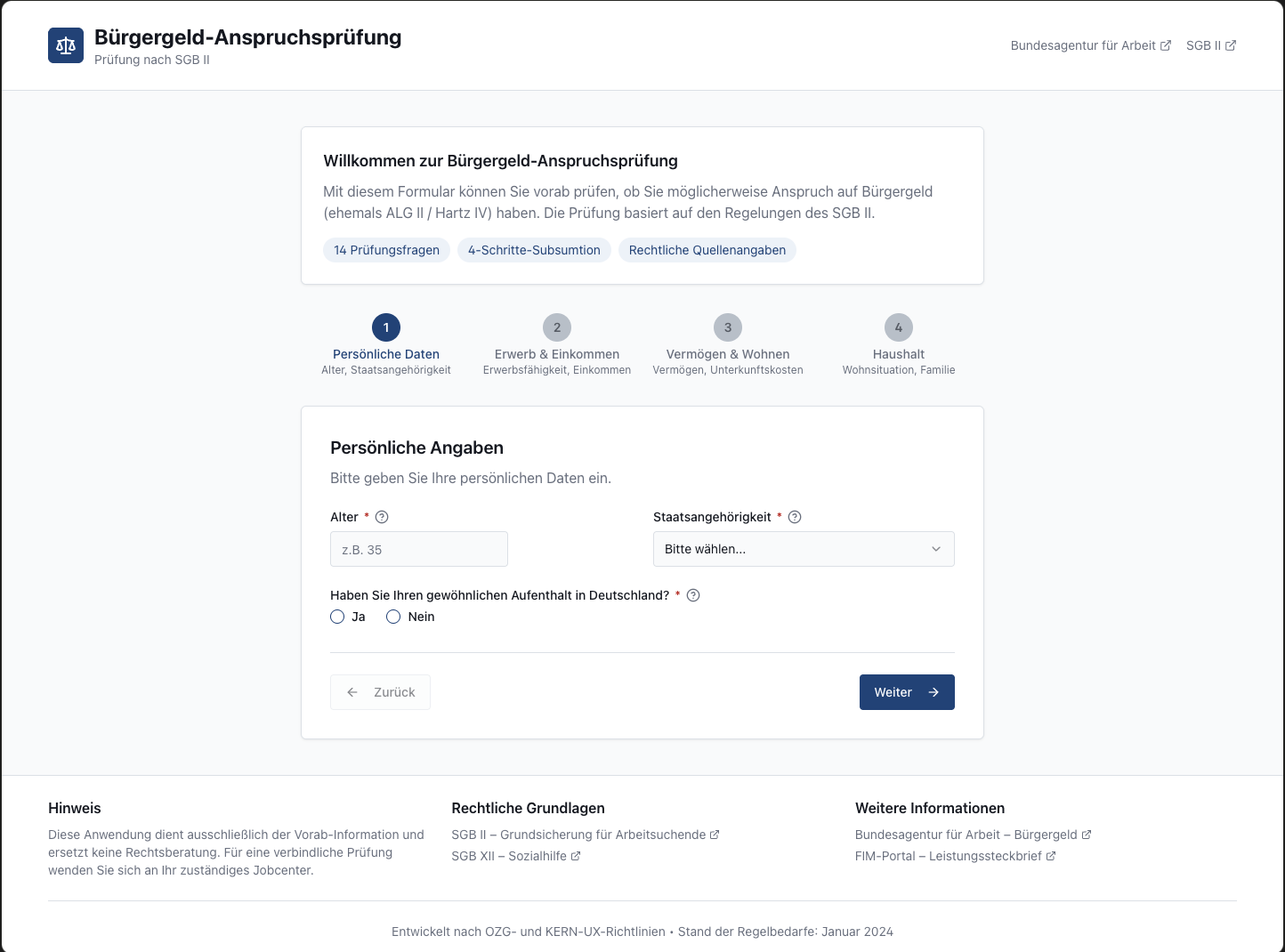
Architecture: Composable + Context OS + AI Stack
Cognitive Hive Architecture
Two layers — Composable (ready-to-use business modules — each with guaranteed Output Contract) + Context OS (ontology-driven governance platform) — modularly extensible, immediately operable. The AI stack is external.
All layers decoupled: start small in production, extend modules step by step (no lock-in).
Technical Facts — For Architects & Developers
For Architects & Developers
Open Source Core
Built on proven open-source frameworks. No vendor lock-in.
On-Premise & Cloud
Deployed in your infrastructure or sovereign cloud. Kubernetes-ready.
API-First
REST & GraphQL APIs for seamless integration into existing domain systems.
How do we get to production? — Production-First
From Idea to Production AI
We don't measure time-to-demo, but time-to-production.
Select
Use case with clear gates
Prove
Evidence Pack + Testbank
Produce
Release-Train + Rollout
Scale
Reuse + Maintenance
Eval-First
Every change must pass a test bank – golden cases, negative cases, regression.
Maintenance as Product
Context maintenance, rule updates, template maintenance, test bank expansion.
"Changes become releases, not projects."
Your First Production Module — Target: 8 Weeks
In 30 minutes we'll show you what your first productive phase looks like – with process, timeline and operations concept.